Most ants in an Oklahoma home or yard are one of five species, and which one you have decides what to do next. The chart sorts them from nuisance to painful, and each species below has a drawing, the details that give it away, and what to do.
Quick answer
Oklahoma State University's insect diagnostic lab names odorous house ants and little black ants as the most common ants inside Oklahoma homes, and fire ants, carpenter ants and harvester ants as common outdoors. Fire ants and harvester ants sting, carpenter ants nest in damp wood, and the two small indoor ants are a nuisance more than a danger.
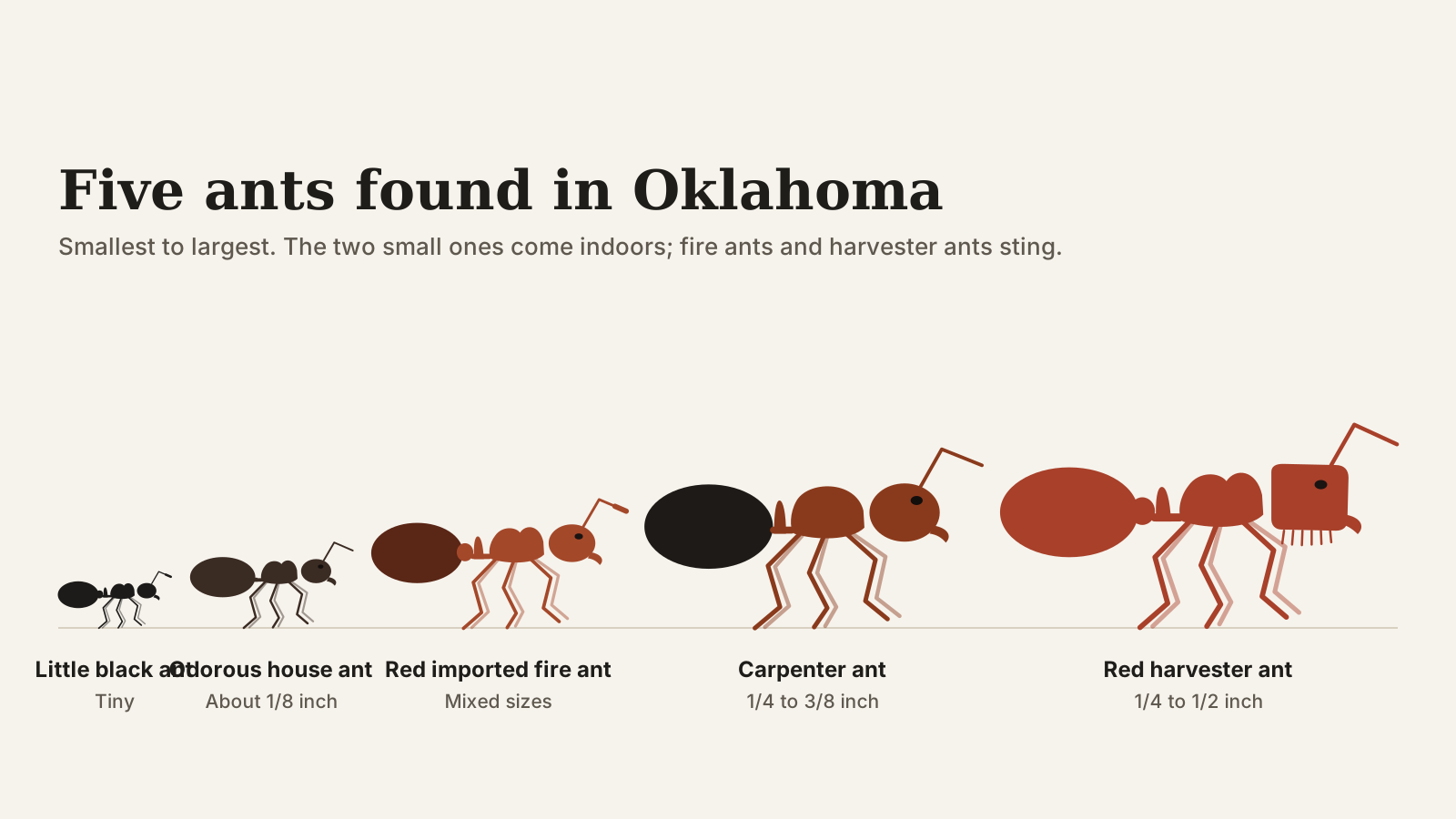
Oklahoma ants, from nuisance to painful
Nuisance indoors
- Little black ant
- Odorous house ant
Watch the wood
- Carpenter ant
Painful sting
- Red harvester ant
Stings in swarms
- Red imported fire ant
A rough guide drawn from the descriptions below. Any of them can be worth a call when they keep coming back.
What are you seeing?
- Tiny dark ants trailing across the kitchen
- Odorous house ants or little black ants. Crush one: a rotten-coconut smell means odorous house ants.
- A fluffy mound of soil in the lawn with no hole on top
- Red imported fire ants, especially a few days after a heavy rain.
- Large ants inside, or small piles of sawdust
- Carpenter ants. Winged ones indoors in late winter or spring usually mean a nest in the house.
- A bare circle in the yard with one hole in the middle
- Red harvester ants.
Dealing with this right now?
Ants in the kitchen, the walls or the lawn? Acenitec will identify them and treat where they nest, across the Oklahoma City metro.
See how our general pest control service works around the OKC metro.
The five ants, one by one
Red imported fire ant
Stings, often many times
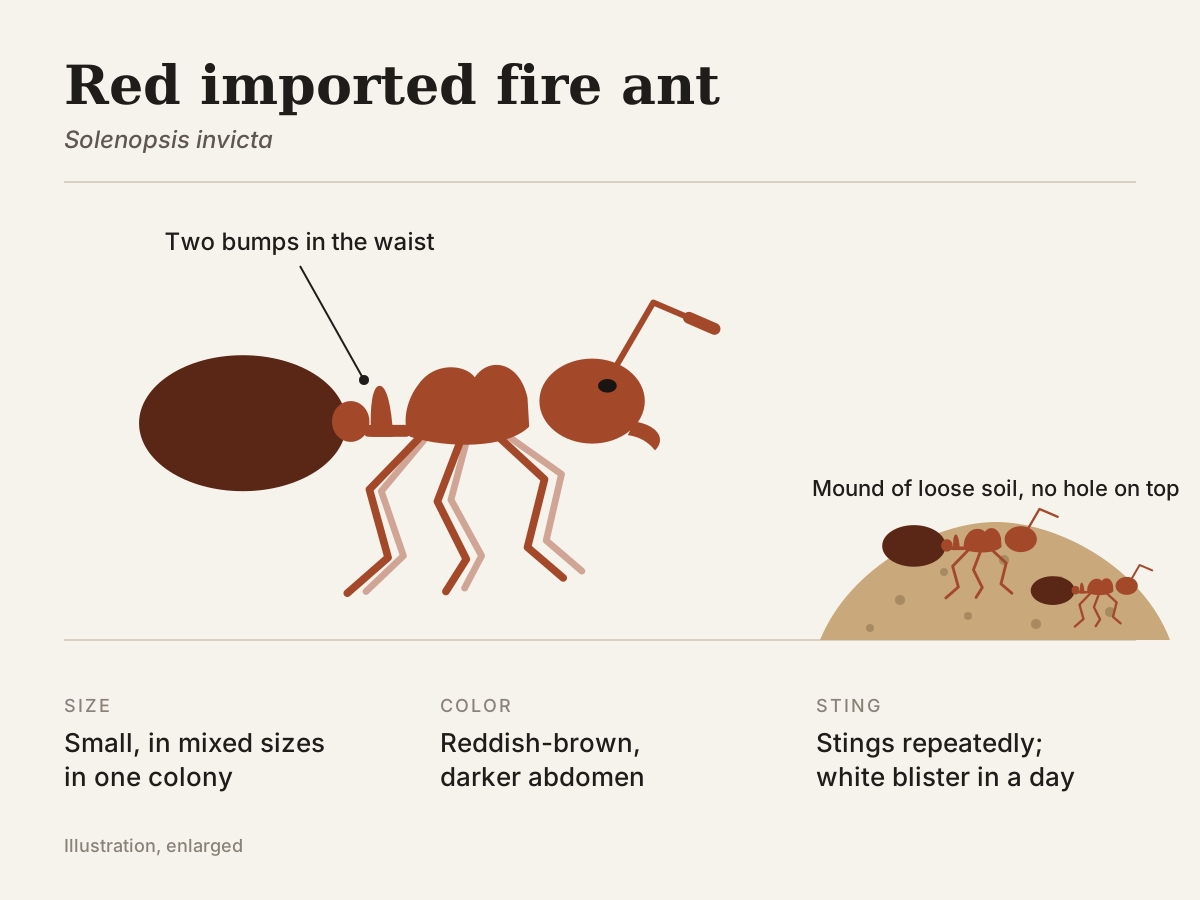
Oklahoma State University's insect diagnostic lab has called the red imported fire ant the most dangerous ant in the state. The workers are reddish-brown, and one colony has ants of many different sizes, which is the easiest way to tell them from native ants. Their mound is fluffy, worked soil with no opening on top, and new ones often show up a few days after a heavy rain.
Disturb a mound and dozens to hundreds of workers pour out and climb grass stems. Each ant grips the skin with its jaws and stings several times; Oklahoma State describes an average of seven to eight stings in a circle. Within about a day a white blister forms at each sting, something only fire ant venom causes.
What to do: Keep children and pets away from the mound and don't break it open. Oklahoma State's extension materials recommend a two-step approach that treats the whole yard, not only the mounds you can see. For a yard that keeps getting them, see our ant control.
Carpenter ant
Nests in damp wood
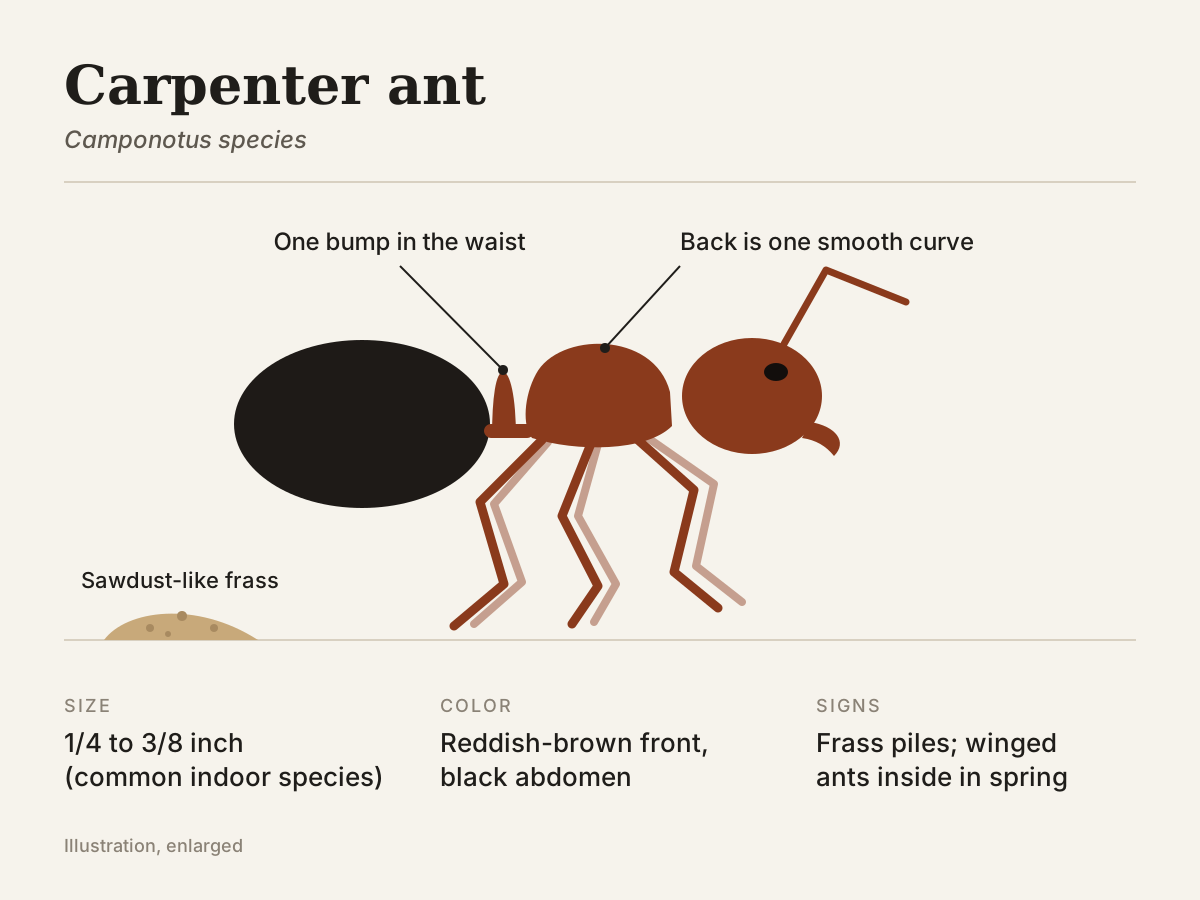
Carpenter ants are the big ones. The most common indoor species is about 1/4 to 3/8 inch long, with a reddish-brown head and middle and a black abdomen, though other species run from yellow to all black. Seen from the side, the top of the middle section is one smooth curve, and there is a single bump in the waist.
They don't eat wood. They hollow it out to nest, usually in trees, but indoors they use soft or damp spots: window and door frames, hollow doors, wall voids and insulation. Small piles of sawdust-like material pushed out of a hole are a sign a nest is close, and winged carpenter ants inside in late winter or spring usually mean the nest is in the house.
What to do: Look for moisture, like a leak or damp wood near where you see them, and follow their trail with a flashlight on a warm night, when they are most active. A nest inside a wall is a job for a pest control visit.
Ants in the house or the yard?
Acenitec treats ants across the Oklahoma City metro. Tell us what you're seeing, and a technician will identify them and treat where they nest.
Odorous house ant
Nuisance indoors
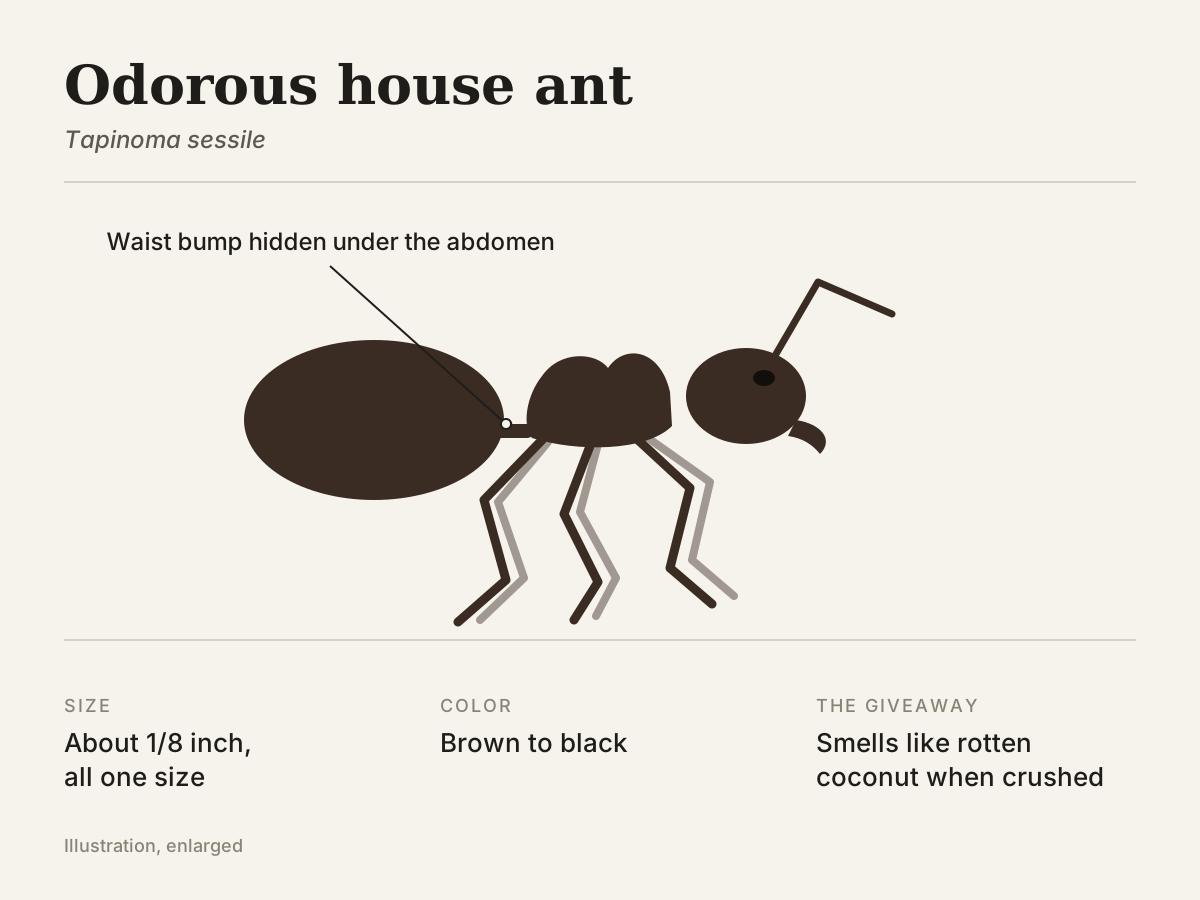
Oklahoma State's diagnostic lab names the odorous house ant as one of the two most common ants inside Oklahoma homes. Workers are small, about 1/8 inch, brown to black and all about the same size. The quickest check is to crush one: it gives off a smell like rotten coconut.
One colony has many queens and splits into many connected nests, so there can be tens of thousands of workers spread around a house. Outside they nest shallow under mulch, rocks and firewood; inside they like warm, damp spots such as wall voids near hot water pipes. They go for sweets, especially the honeydew aphids leave on plants, and mostly ignore greasy food.
What to do: Keep sweets sealed, wipe up spills and pull mulch back from the foundation. Because a colony spreads across many nests, the ants on the counter are only a small part of it; baits placed where they are feeding reach more of it than spraying the trail.
Little black ant
Nuisance indoors
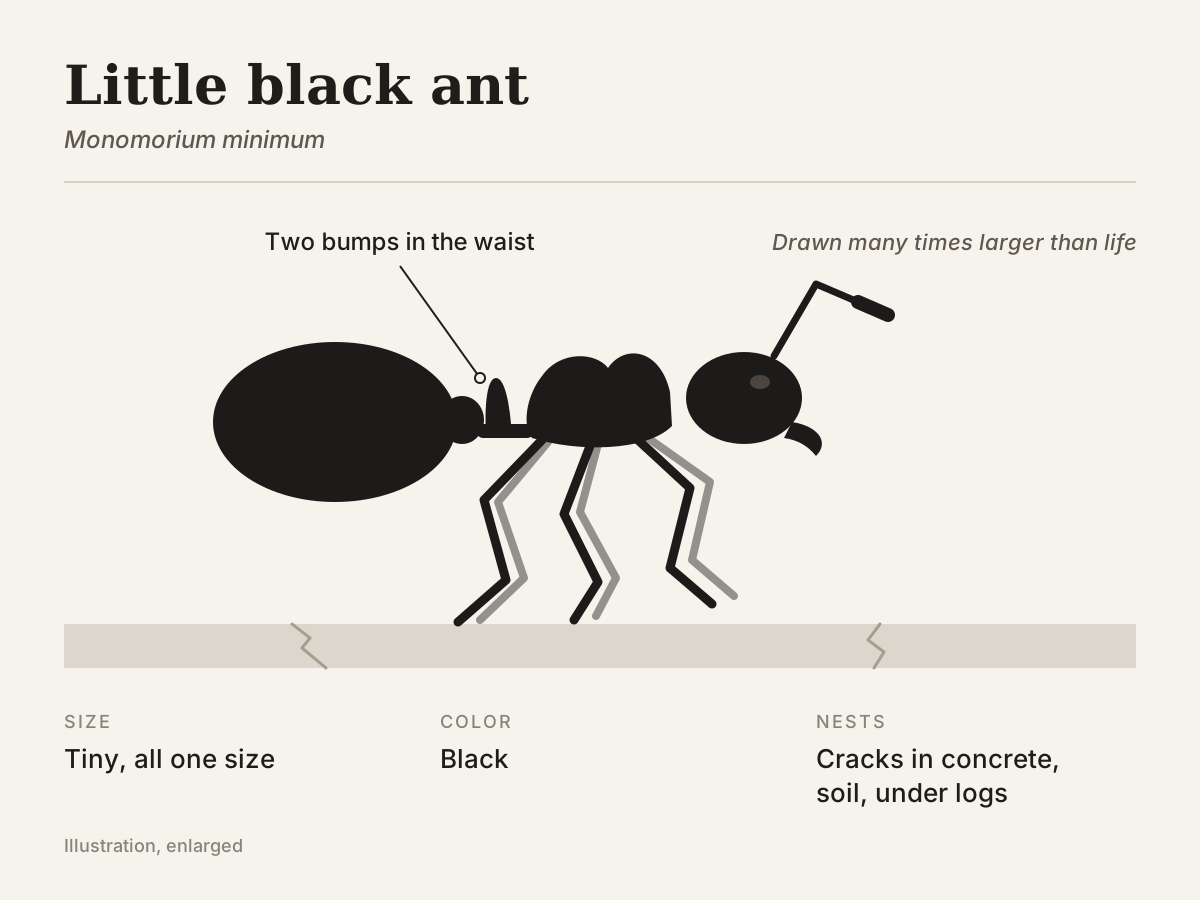
The other common indoor ant in Oklahoma, according to Oklahoma State. Little black ants are tiny, black and all one size, with two bumps in the waist where the odorous house ant has one hidden one.
Their small size lets a colony live in very small spaces: cracks in concrete, soil, under logs. From there they forage inside houses for food.
What to do: Store food sealed and clean up crumbs and grease. Oklahoma State points to caulk and screening to close the gaps where trails come in, and to baits placed where the ants are active.
Red harvester ant
Painful sting
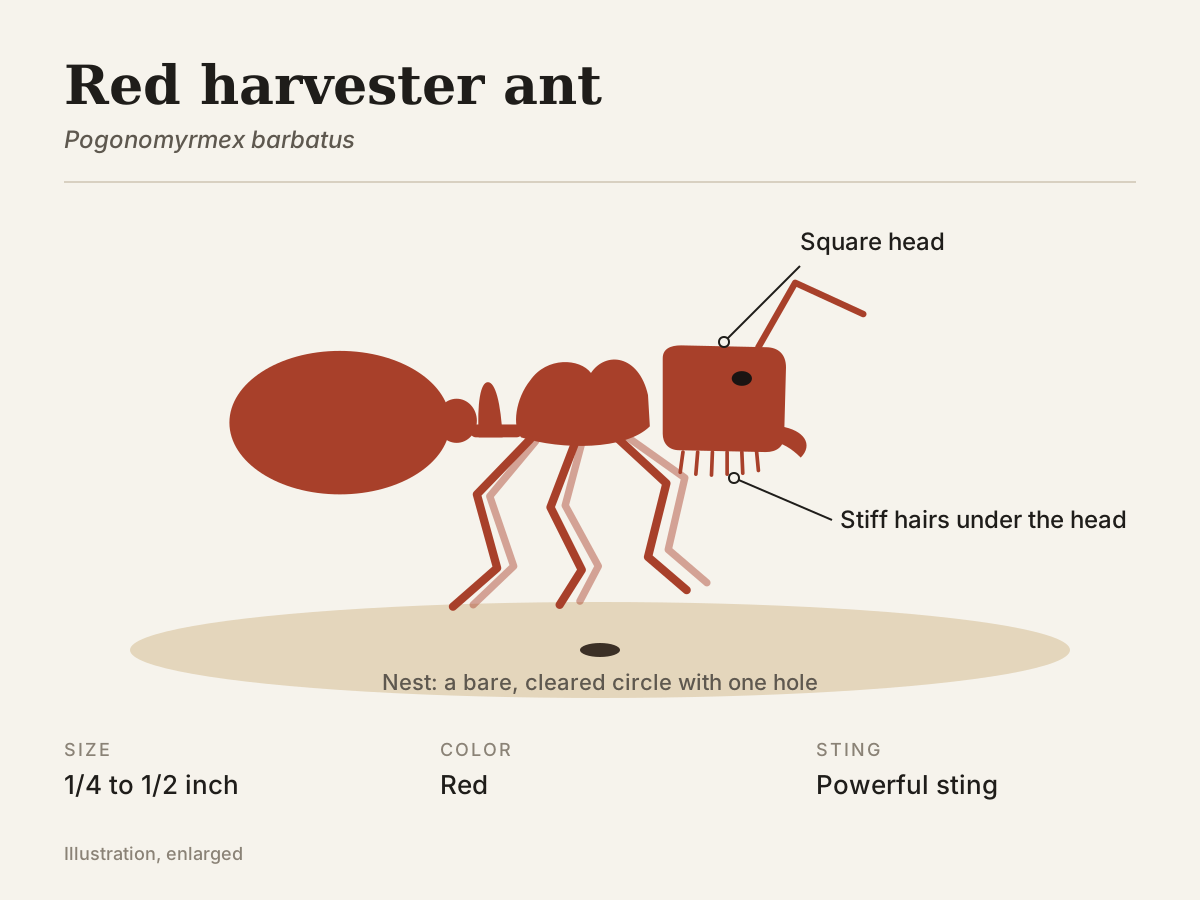
Big, red ants, 1/4 to 1/2 inch long, with a squared-off head and a row of stiff hairs underneath it that they use to carry loads. Their range runs from Kansas and Oklahoma down through west Texas.
You'll know the nest: a bare, cleared circle with one hole in the middle, often around 12 feet across and anywhere from 3 to 35. They gather seeds and dead insects and store them in the nest. They have a powerful sting, and people playing on a lawn near a nest are the ones who usually find out.
What to do: Keep children and pets off the cleared circle. If a nest sits where people walk or play, we can treat it.
Keeping ants out of the house
Ants come inside for food and shelter, so the first steps are about both. An Oklahoma State extension coordinator puts sanitation and housekeeping first: food in the refrigerator or in sealed plastic, metal or glass containers, pet food and birdseed sealed and away from the kitchen, and no dishes left in the sink.
Outside, clear grass clippings, leaves and dead plants away from the foundation. In warm months nests are often close to the house in mulch or leaf litter; in late fall and winter they move into wall voids, behind brick and into flower pots.
When to call for help
Oklahoma State's advice is that severe, widespread or persistent ant problems may need a pest control professional. That goes double for fire ants in a yard where children play and for carpenter ants nesting inside the walls. If you're not sure which ant you have, contact us and we'll identify it.
Related
Sources
- Oklahoma State University: Red Imported Fire Ants
- Oklahoma State University: Keeping ants out of the house (2017)
- PMP: Ants invading Oklahoma homes (Dr. Richard Grantham, OSU Plant Disease and Insect Diagnostic Lab, 2008)
- Texas A&M AgriLife: How can I tell if I have fire ants?
- Texas A&M AgriLife Extension: Carpenter ants around homes (ENT-2001)
- Utah State University Extension: Odorous house ant
- Mississippi Entomological Museum: Little black ant (Monomorium minimum)
- Texas A&M Urban and Structural Entomology: Red harvester ant